

Project Background & Core Challenges
Driven by the global upgrade of intelligent manufacturing, a modern alcohol processing enterprise located in Chachoengsao, Thailand, is fully accelerating its transition toward a smart factory paradigm.
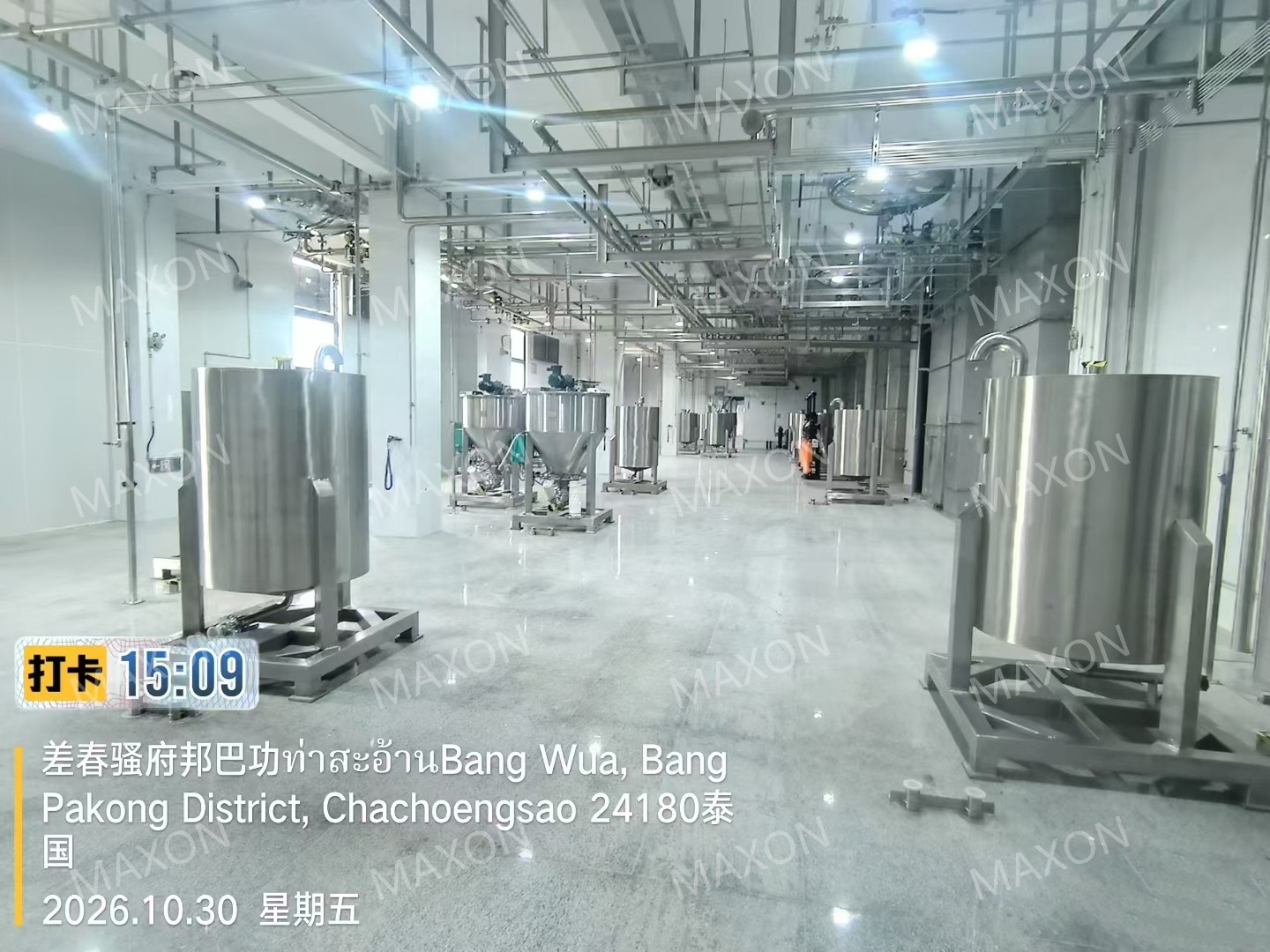
Inside the facility's modern batching and fluid processing workshop, numerous stainless steel fermentation tanks, blending vessels, and interlaced overhead transfer pipelines are densely deployed. While this highly automated manufacturing environment ensures high-throughput production, it introduces two extremely severe challenges for industrial wireless communications and automated logistics:
- Hazardous Environment with Explosive Gases and Dusts: During fluid blending, alcohol processing, and high-standard CIP (Clean-in-Place) cleaning, volatile flammable gases and specific particulate risks easily accumulate, establishing typical ATEX/IECEx Zone 2 or Zone 22 hazardous areas. Consequently, all electrical equipment and mobile material handling assets must comply with strict explosion-proof safety standards.
- Severe Non-linear Signal Shielding and Multipath Interference: The closely packed, high-rising stainless steel tank farm acts as a natural source of multipath interference and RF obstruction. When automated vehicles move behind machinery, make turns, or alter their headings, the wireless propagation path is drastically blocked. Conventional industrial wireless APs frequently suffer from RF dead zones, leading to frequent client disconnections at coverage transition points.
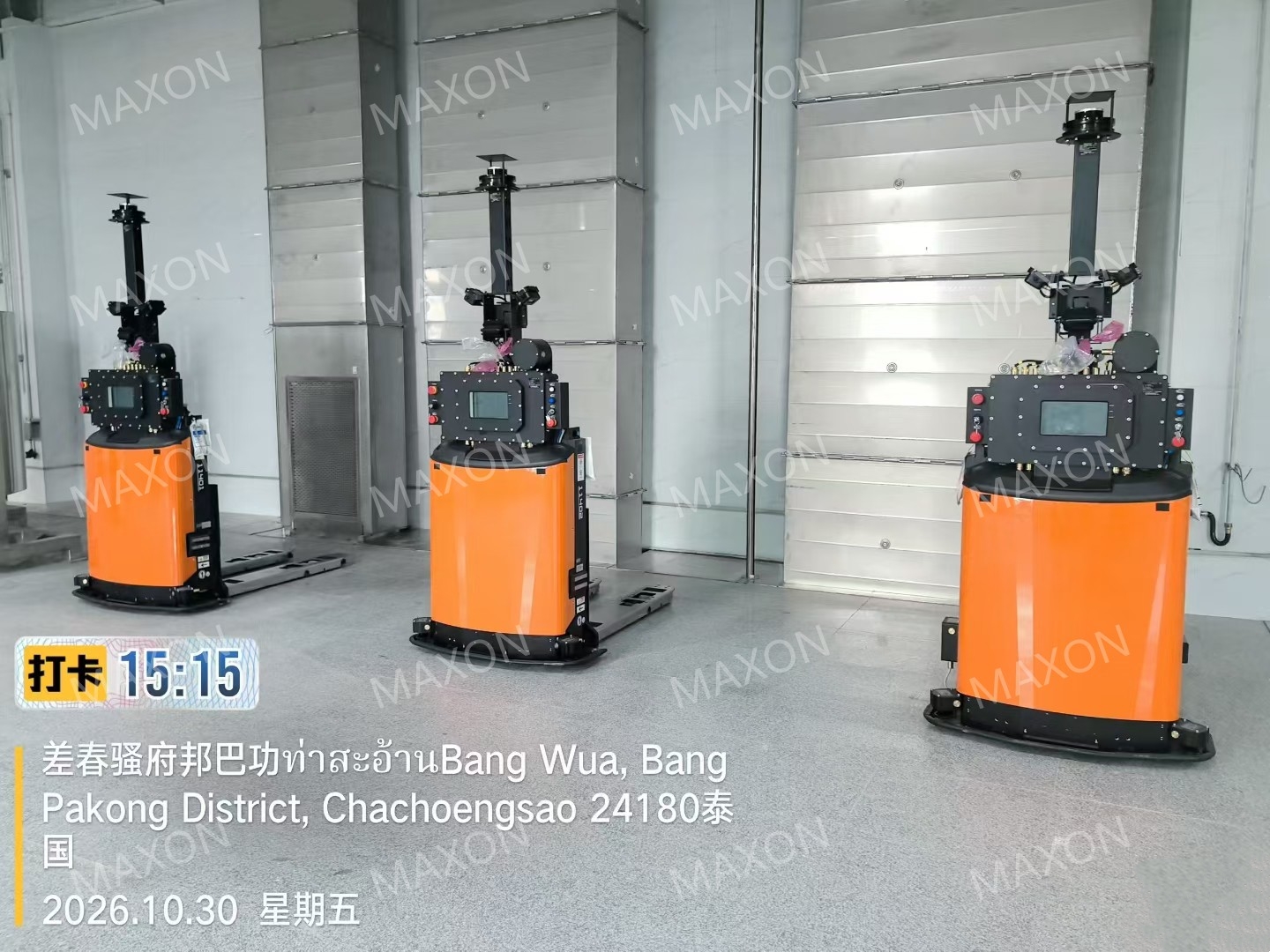
To achieve unmanned intelligent warehousing and logistics, the client deployed explosion-proof automated guided vehicles and autonomous mobile robots (AGVs/AMRs). The core engineering bottleneck lies in the necessity for an integrated coverage and roaming deployment plan mapped along the vehicles' exact driving paths, stopping positions, and cross-zone handover points. Simply increasing AP transmission power or relying on static handheld site survey meters in open spaces cannot guarantee the uplink quality of an AGV/AMR running under loaded conditions.
To address these pain points, Nanjing Maxon custom-engineered an integrated wireless communication solution combining Global High-Protection Explosion-Proof APs with Vehicle-Mounted Independent Dual-5GHz Links.
Maxon Industrial Communication Network Design
To counter the complex field anomalies of this project, Maxon adopted a collaborative architecture of "fixed explosion-proof AP coverage combined with vehicle-mounted client cross-zone handover":
1. Global Facility Coverage: MX811-1F Industrial Explosion-Proof Wireless Access Point (AP)
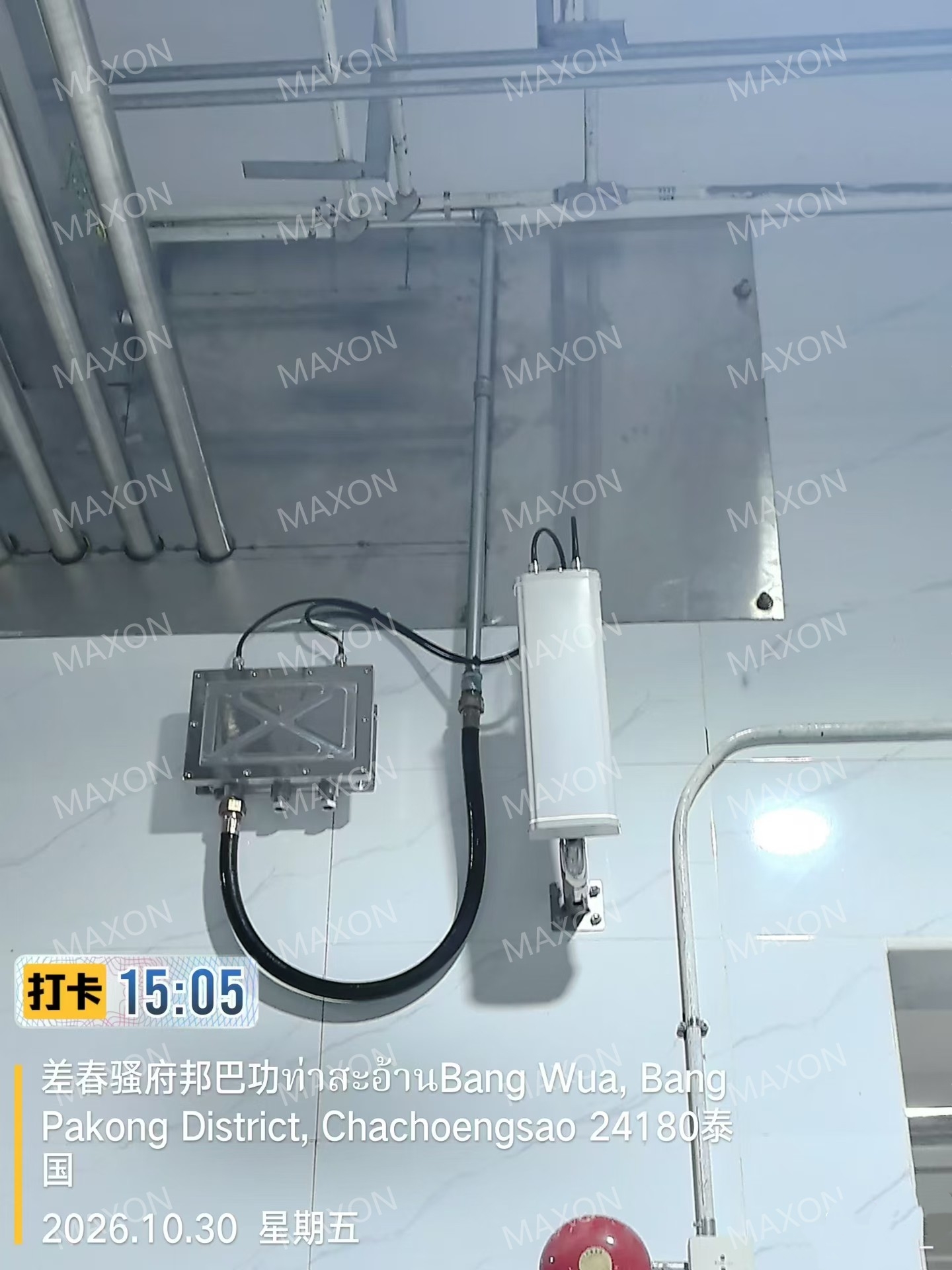
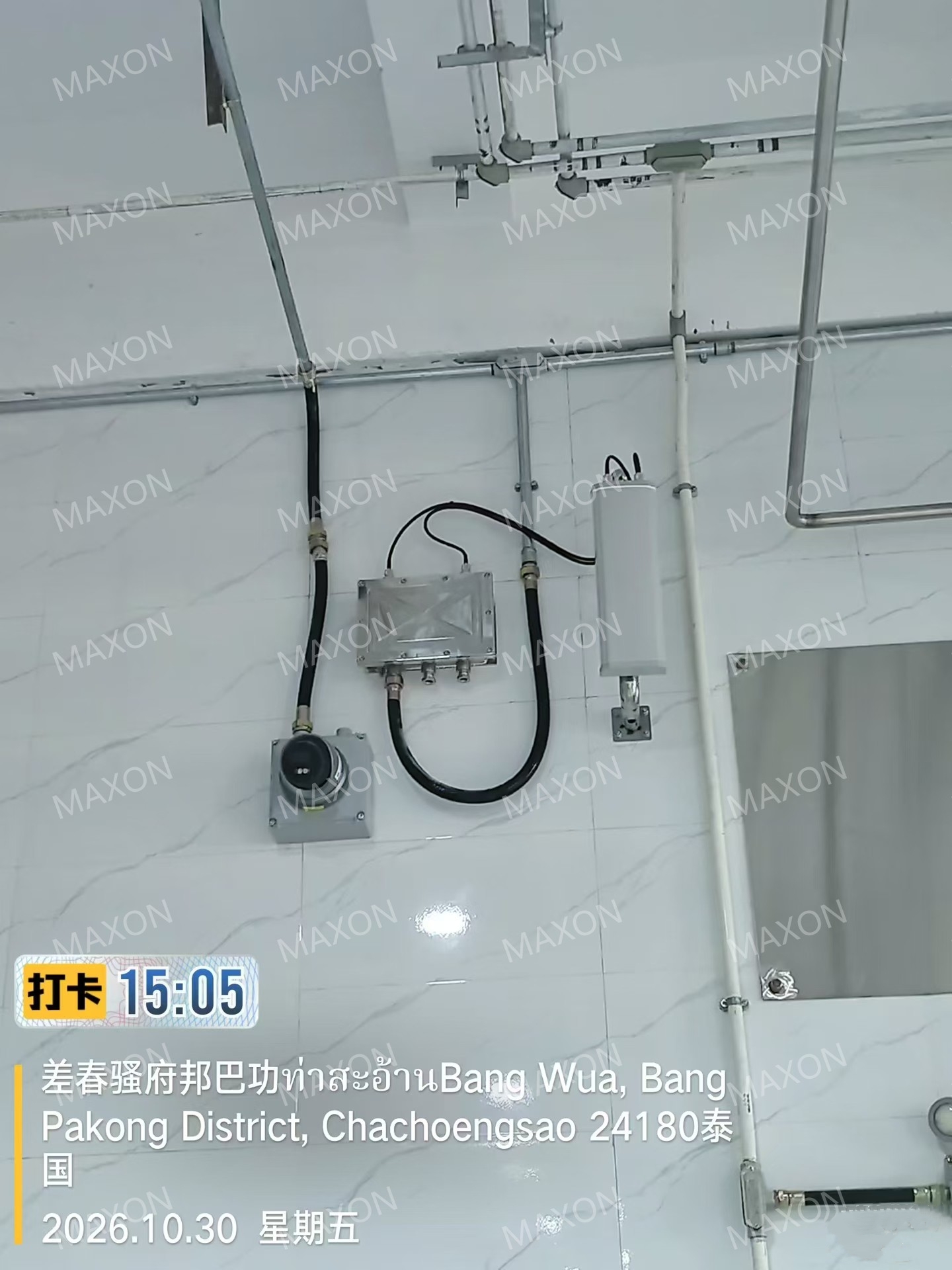
Maxon MX811-1F explosion-proof industrial APs were deployed at height on workshop walls and overhead pipe racks, strategically mapped around the AGV/AMR operational lanes.
- Physical-Layer Intrinsic Safety: The MX811-1F holds the authoritative Ex db IIB T6 Gb / Ex tD A21 IP68 T80℃ explosion-proof certifications. Its ruggedized enclosure is not only flameproof but also highly resilient against chemical corrosion and high-pressure jet washdowns typical of food and pharmaceutical-grade hygienic washdown regulations.
- RF Coordination & Multipath Mitigation: Supporting IEEE 802.11ac standards and 2x2 MIMO technology, the design team meticulously fine-tuned the AP transmission power and antenna orientation within the metal-dense environment. This setup guarantees an optimal link margin and controlled overlap zones between adjacent APs, effectively suppressing co-channel interference and eliminating the non-linear attenuation caused by metal structures.
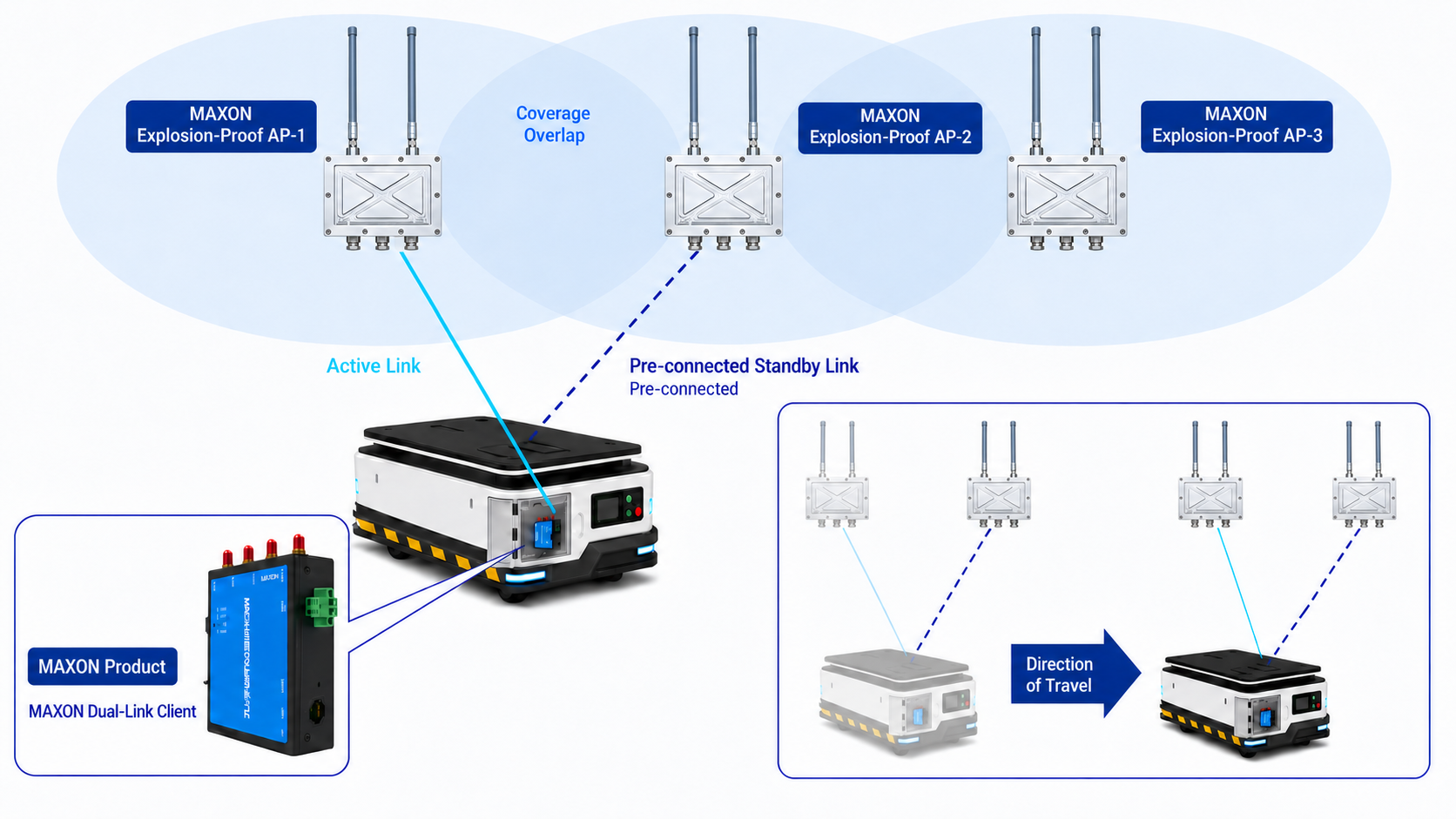
2. AGV/AMR Vehicle-Mounted Mobile Terminal: MD5012C-ZR Dual-5GHz Wireless Client
At the controller end of the explosion-proof AGV, the Maxon MD5012C-ZR industrial wireless client was deeply integrated.
- Independent Symmetrical Dual-5GHz Link Architecture: In electromagnetically noisy industrial environments, the 2.4GHz spectrum is highly prone to co-frequency congestion. The MD5012C-ZR innovatively utilizes two completely independent 5GHz high-speed links to establish concurrent primary and backup data paths with the upstream APs. When the primary link weakens as the AGV enters a tank's shadow zone, the system instantaneously switches to the backup link. The symmetrical performance across both 5GHz channels ensures predictable and smooth roaming.
- Business-Continuity-Oriented Roaming Strategy: Driven by a client-based millisecond-level fast roaming mechanism, Maxon shifts the focus from physical switching overhead to end-to-end business continuity. The MD5012C-ZR features intelligent traffic shaping and QoS (Quality of Service) packet prioritization, which isolates and prioritizes motion control commands and PLC I/O signals. This ensures zero packet drops and zero timeout errors for backend telemetry as the vehicle traverses sharp turns, corners, and AP coverage boundaries.
- Vehicle-Level Explosion-Proof Integration: The device features a compact DIN-rail mount form factor (measuring only 110mm92mm33mm). Engineering guidelines dictate that installing a standard wireless client inside an explosion-proof AGV chassis does not automatically grant safety compliance to the entire vehicle. During integration, Maxon collaborated with the client to conduct a comprehensive whole-vehicle explosion-proof design review—incorporating the client unit, power supply line, external RF feeder routing, and effective antenna radiation conditions—ensuring a seamless fit within the confined flameproof control cabinet.
Core Deployment & Joint Commissioning Outcomes
During final site integration, the engineering team prioritized the continuity of the end-to-end business path as the primary acceptance metric, moving beyond basic RSSI (Signal Strength) diagnostics. Testing scenarios incorporated fully loaded vs. empty vehicle weight configurations, varied mast heights, bidirectional navigation, sharp turns, and multi-vehicle high-density concurrency:
- Full-Scenario Intrinsic Safety Realization: Both fixed network infrastructure and vehicle-mounted clients operated safely and reliably under volatile alcohol and particulate ambient hazards, maintaining absolute compliance with local and international industrial hazardous area regulations.
- Zero Business-Timeout handover: Field verification proved that when the explosion-proof forklifts crossed adjacent AP boundaries, backend mission dispatches, PLC status heartbeats, and network sessions remained perfectly uninterrupted, preventing any emergency stops triggered by packet loss timeouts.
- Automated Logistics Efficiency Surge: The high-reliability wireless network completely eliminated communication blind spots, allowing the material batching, warehousing, and dispatching processes at this Thailand processing plant to run 24/7 with seamless, high-density automation.
Conclusion
The success of this deployment highlights the importance of treating hazardous area wireless coverage, industrial device access, vehicle-mounted wireless integration, and cross-AP roaming as a single, holistic engineering system. By combining high-protection explosion-proof hardware with robust dual-5GHz fast roaming algorithms, Nanjing Maxon not only protects industrial safety redlines but also builds a resilient digital foundation for every corner of the modern smart factory.
Related Technical Documentation & Hardware Guides:
- Infrastructure Side: MX811-1F Industrial Explosion-Proof Wireless AP Product Details
- Mobile AGV Side: MD5012C-ZR Dual-5GHz Industrial Wireless Client Product Details
View the embedded image gallery online at:
https://mxcomm.cn/cases/3959.html#sigProId184c2fa77f
https://mxcomm.cn/cases/3959.html#sigProId184c2fa77f