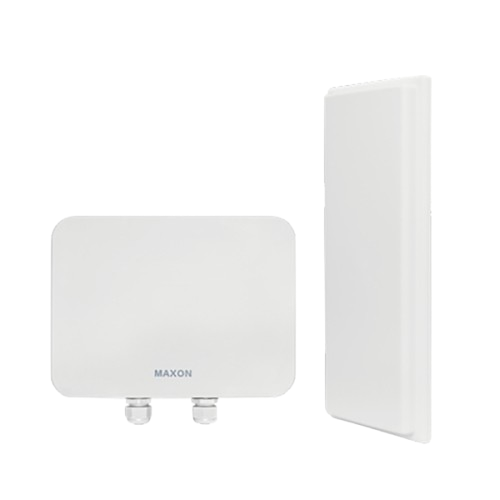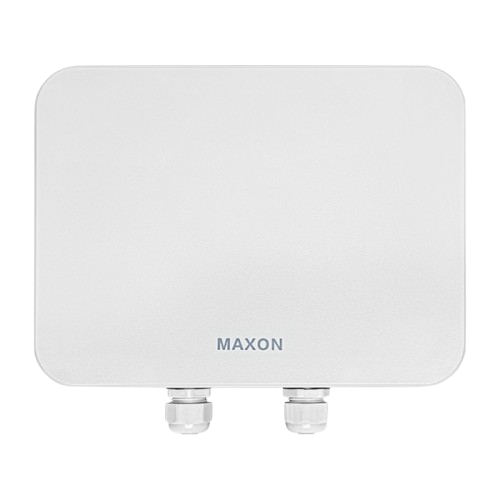
Industrial Wireless AP
Provide local wireless access for compatible monitoring devices and field terminals at river, reservoir, pumping station and sluice gate sites within the water management network.
MX5012A · MX6022A · MX6023A
View products →
The digital transformation of river and lake management is a vital advancement for modern water resource conservation, flood prevention, and ecological protection. In the vast and often inaccessible terrains of reservoirs and river basins, industrial-grade wireless access points and WiFi bridges serve as the primary communication arteries. These technologies are specifically engineered to overcome the prohibitive costs and physical impossibility of laying fiber optic cables across aquatic environments. By providing a stable, high-capacity backbone for real-time data and remote gate control, industrial wireless solutions ensure that water management authorities can monitor environmental health and respond to flood risks with unprecedented precision.
Aquatic environments present a unique set of stressors that render standard commercial networking equipment ineffective. Devices deployed along shorelines or on open water face constant exposure to high humidity, salt spray corrosion, and extreme temperature fluctuations. To maintain operational continuity, communication hardware must feature an IP68 protection rating and specialized anti-corrosion housings. Furthermore, the geographical dispersion of monitoring points, such as remote sluice gates and water quality buoys, requires long-range transmission capabilities that can bridge several kilometers without signal degradation. During critical periods like flood seasons, the demand for low-latency, real-time data becomes a matter of public safety, necessitating a network with high reliability and superior anti-interference protocols.

MAXON industrial wireless access points offer IP68-rated enclosure protection for outdoor installations. This supports wireless coverage at exposed riverbanks, reservoirs and pumping stations where dust and water ingress are practical concerns. Enclosure protection helps match the wireless equipment to the installation environment.

Industrial wireless bridges support point-to-point and point-to-multipoint network layouts for dispersed water monitoring sites. These options let engineers connect individual stations or group several remote locations around a central collection point, reducing reliance on continuous cable routes where extending fiber across river or reservoir terrain is difficult.

MAXON offers Wi-Fi 5 and Wi-Fi 6 options across the recommended industrial wireless AP and bridge range. Engineers can select the radio generation and antenna arrangement around site coverage, client compatibility and backhaul requirements, rather than using one wireless configuration for every monitoring point in the project.

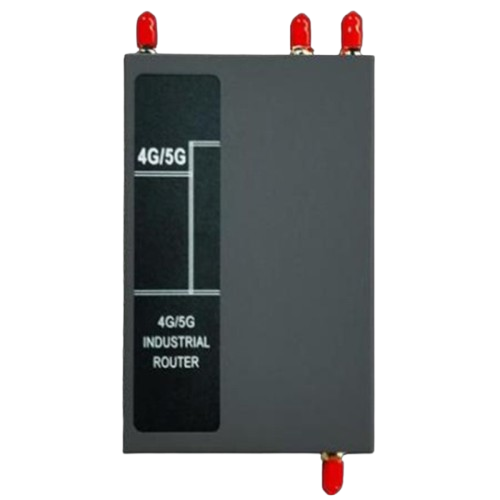
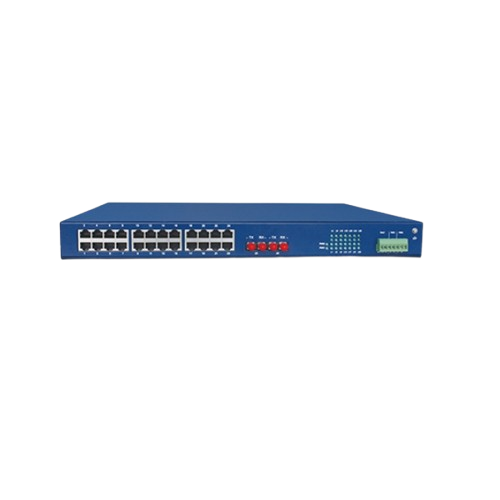
The solution combines wireless access and backhaul with industrial Ethernet switching and 4G or 5G router options. This gives water management projects several ways to connect field equipment and uplink remote stations, allowing wired local networks, wireless site links and cellular connectivity to be selected for different locations.
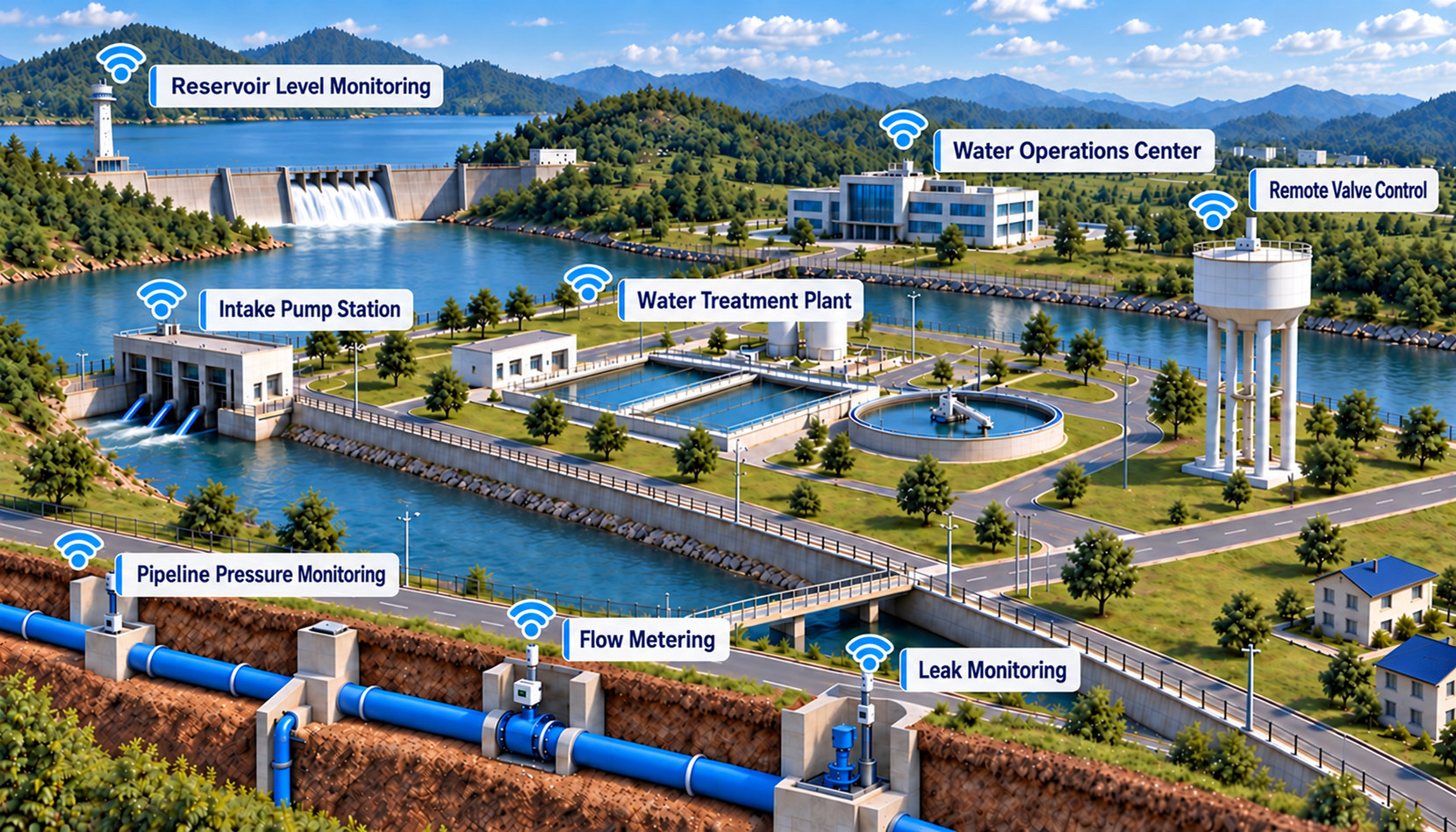
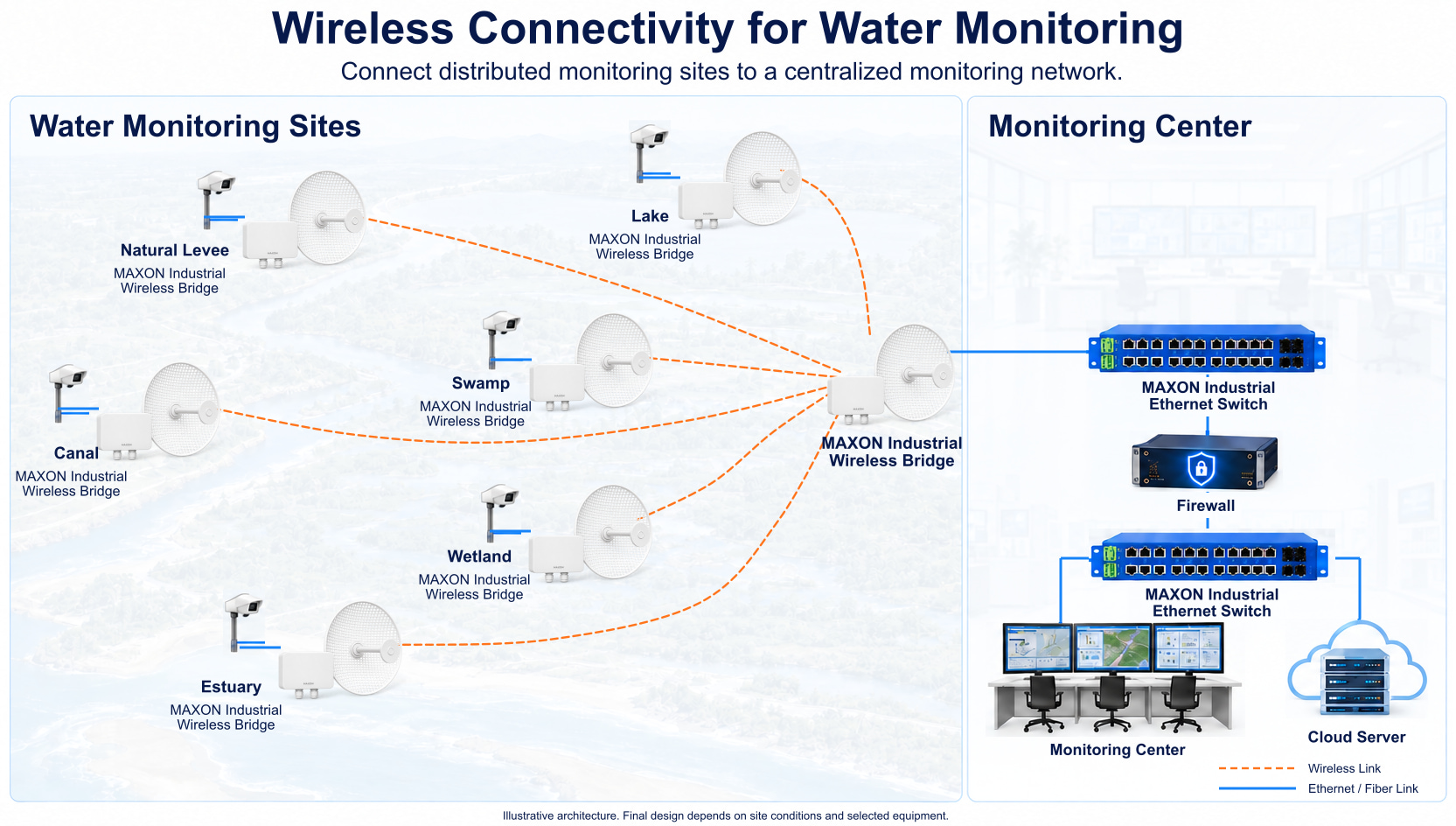
Industrial wireless access points provide local coverage, wireless bridges connect separated sites, cellular routers provide mobile network uplinks, and industrial Ethernet switches connect wired equipment within each site.
For river monitoring and reservoir monitoring locations, bridges and access points can form communication links between field equipment and a central basin management office. Example traffic includes hydrological data, water quality monitoring data, video and control signals from connected systems. At remote pumping stations and sluice gates, the network can carry communications between site equipment and the wider management network.
This arrangement supports water monitoring and flood control operations by transporting data between connected endpoints. It does not itself measure water level, flow or quality, perform flood analysis, or operate a gate; those functions depend on the sensors, control equipment and software connected to the network.
An industrial wireless bridge connects network sites over a wireless link. In a water management network, it can carry data, video or control signals between separated field locations and a central site.
Yes. The described solution uses wireless links to connect fixed monitoring stations, pumping stations and remote sluice gate sites. Connected control equipment and applications provide the monitoring and control functions.
The equipment described here provides network connectivity. Water quality and water level measurements come from connected sensors, while monitoring and analysis depend on the relevant platform or control system.